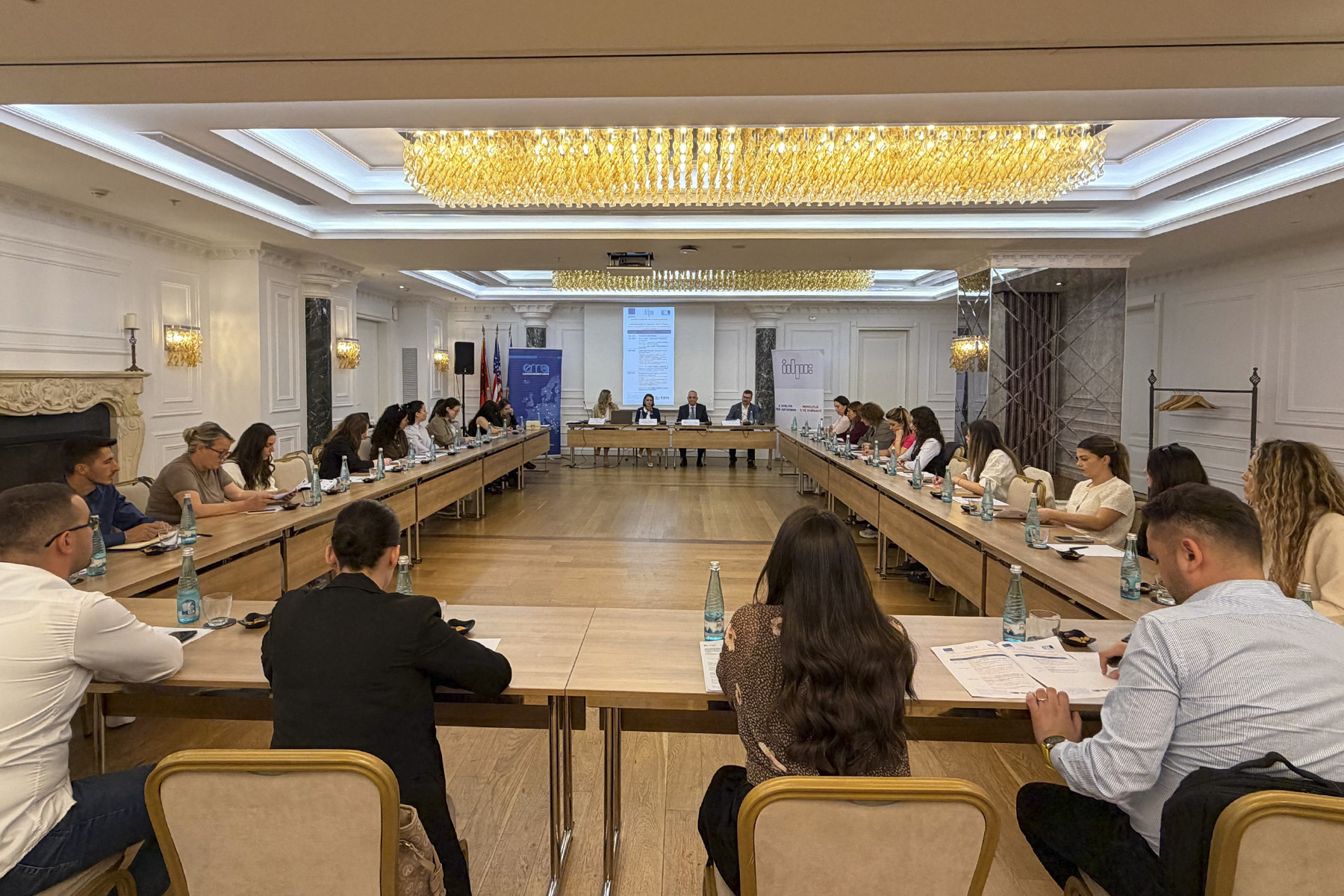
The regulation of lobbying activity in Albania, the challenges of implementation and coordination with European standards were the focus of the roundtable organized within the framework of the National Convention on European Integration, with the participation of public institutions, civil society, experts and international partners.
The activity was organized by the European Movement in Albania (EMA) in cooperation with the Information and Data Protection Commissioner, within the framework of the Working Group on Chapter 23 “Judiciary and Fundamental Rights”.
In his speech, Commissioner Besnik Dervishi described Law No. 12/2026 “On Lobbying in the Republic of Albania” as an important step towards strengthening institutional integrity, transparency and accountability in public decision-making processes. According to the Commissioner, for the first time in Albania, a special legal framework is being created that aims to guarantee that the interaction between private interests and public institutions takes place in a declared, monitorable manner and in accordance with the public interest.
“This law takes on a special importance precisely because it affects and regulates the interaction with the highest levels of decision-making in the state. Navigating the boundaries of the law or seeking legal coordinates in decision-making processes, from MPs to the Speaker of the Parliament, from ministers to the Prime Minister, from heads of administration to mayors, requires not only formal transparency, but strong standards of institutional integrity”, said Commissioner Dervishi.
He stressed that the law has been drafted in accordance with the standards and recommendations of the European Union, the Council of Europe and the OECD, while also highlighting that the main challenge remains the effective implementation of the law, the establishment of functional oversight mechanisms and the strengthening of the human and administrative capacities of the institution responsible for its monitoring.
The Executive Director of the European Movement in Albania (EMA), Mr. Gledis Gjipali, stressed that the European integration process is not only related to the formal adoption of legislation, but above all to its concrete implementation and respect for European standards in practice.
According to him, in the language of the European Commission itself, the emphasis is constantly placed on the effective implementation of laws, which constitutes a common challenge for all Albanian institutions.
During the roundtable, the Director of Transparency Programs Monitoring Department at the Commissioner’s Office, Ms. Emerlinda Pema, presented aspects related to the functioning and management of the Lobbying Register, the supervisory and control functions of the Commissioner, as well as the need to strengthen institutional capacities for effective implementation of the law.
The Director of Programs at “Partners Albania for Change and Development”, Ms. Klotilda Kosta, brought the perspective of civil society on the expectations and uncertainties that accompany the implementation of the lobbying law, emphasizing the importance of a clear distinction between lobbying and public advocacy, as well as the need to avoid disproportionate administrative burdens for civil society organizations.
Meanwhile, Mr. Michal Piško, Director of Transparency International Slovakia, presented online European practices and standards on lobbying regulation, with a focus on transparency models, the role of supervisory institutions and the challenges encountered in the effective implementation of lobbying legislation in European Union countries.
Participants shared recommendations and raised questions on law enforcement and ensuring a transparent and credible lobbying process in Albania.