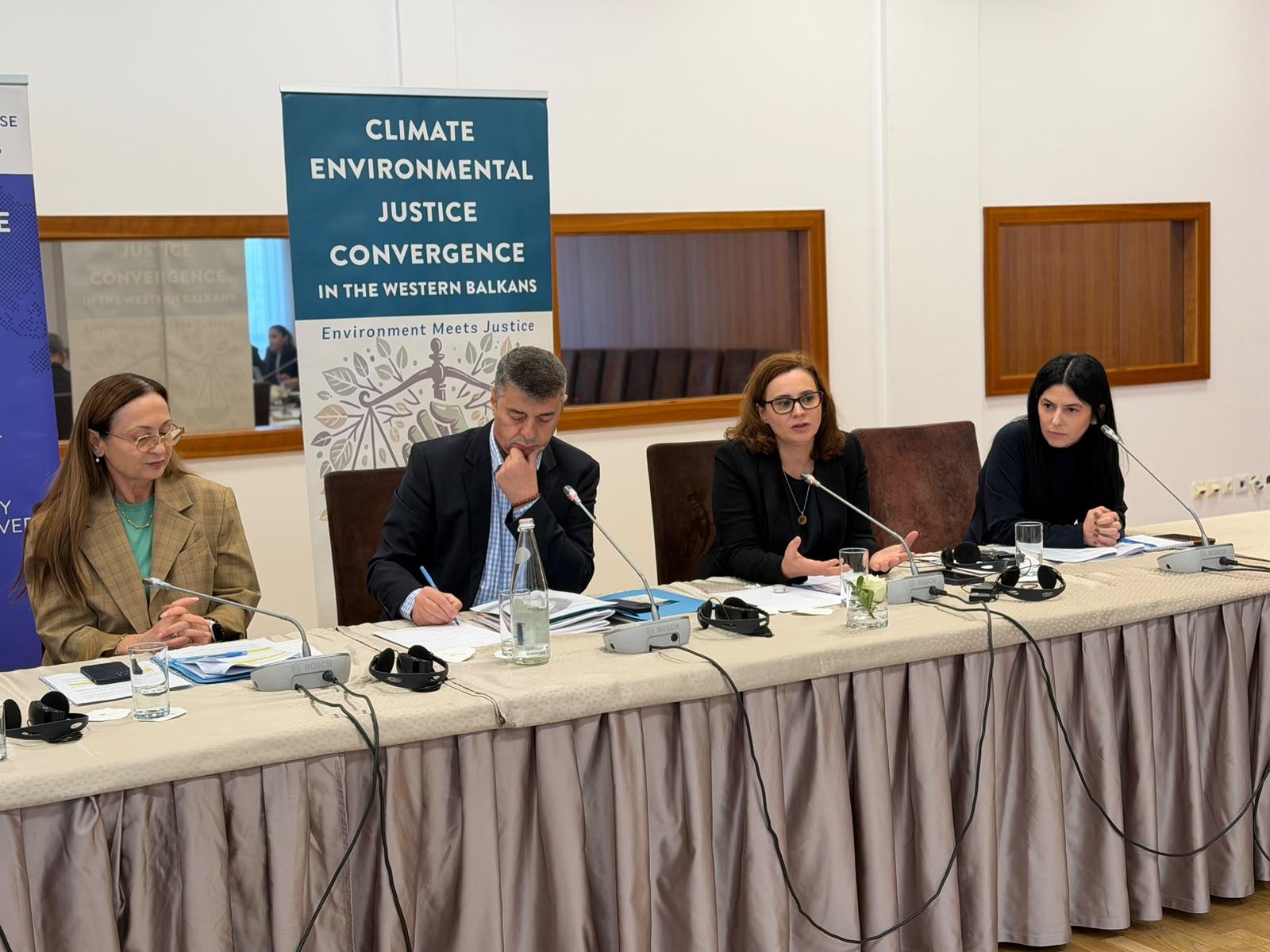
Ensuring access to information and the transparency of public institutions were the focus of the contribution made by the Information and Data Protection Commissioner’s Office during a national workshop on strengthening public participation in environmental decision-making, held on October 23, 2026, in Tirana.
The event was organized within the framework of the project “Convergence of Climate and Environmental Justice in the Western Balkans,” supported by the French Development Agency and implemented by Expertise France. Representatives from central and local government bodies, supervisory institutions, and civil society, along with various experts, discussed the obstacles that limit citizen involvement, as well as mechanisms for improving public consultations.
The Commissioner’s Office was represented by Ms. Rovena Sulstarova, Director General for the Right to Information, who participated in a panel focused on identifying barriers and defining institutional responsibilities. In her remarks, she addressed the competencies of the Commissioner’s Office regarding the implementation of Law No. 119/2014, “On the Right to Information.” She specifically highlighted obligations for proactive transparency and the importance of the “Transparency Program” particularly for local self-government units in keeping the public informed about consultation processes and institutional decision-making.
In this context, Ms. Sulstarova emphasized that transparency should not be limited merely to the publication of consultation notices; rather, it must also encompass information regarding the outcomes of consultations and how citizens’ proposals have been addressed. The public should be able to understand not only which decisions were reached, but also how their contributions were evaluated and reflected in the decision-making process.
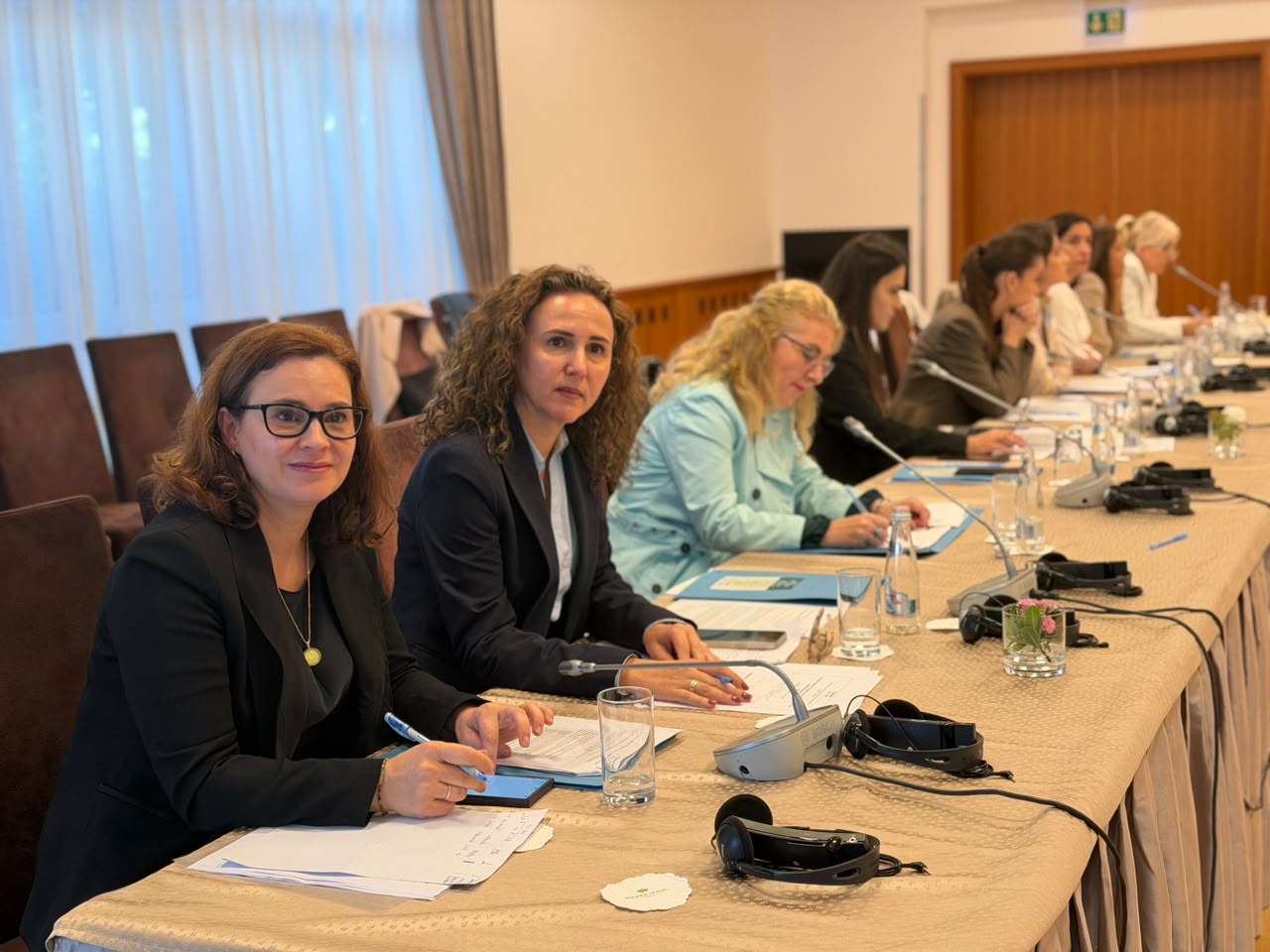
The meeting focused on discussing the draft roadmap for Accountability and Response Mechanisms (2026–2030), which is based on evaluations from a pilot project in the Municipality of Elbasan. This document aims to strengthen transparency and accountability in environmental governance by improving consultation practices and inter-institutional cooperation.
In this context, Transparency Programs and the Proactive Transparency Index are incorporated into the draft roadmap as reference tools for assessing transparency and access to information. Emphasis is placed on the timely publication of consultation documents, as well as on improving the quality and accessibility of information to facilitate informed public participation. The document also proposes tools for planning consultations, documenting and addressing feedback, and publishing the outcomes. The objective is to ensure that citizens are clearly informed about how their contributions were considered and why specific proposals were or were not incorporated into final decisions.
These measures are intended to strengthen the link between information, participation, and accountability in environmental matters, in line with the principles of the Aarhus Convention and Albania’s European integration priorities.